Fowlerville Community Schools Facility Research Findings
Research conducted in October 2026 gathered community feedback on facility needs, potential improvements and support for a future school bond proposal. The findings highlight strong recognition of the need to maintain existing school buildings, with more mixed reactions to expanding facilities.
The Central Finding
Participants recognize the need to maintain current school buildings. Support becomes less consistent when the plan moves from repairs to additional facilities.
Project scope, cost comparisons and sequencing are central to the next planning phase.
Research Overview
The research included two components:
- Focus panels: Nine focus panels were conducted October 6 and 7, 2026, with a cross-section of Fowlerville community members.
- Community survey: A community survey was open from October 8 through October 16, 2026, and received 744 responses.
Perception of Facility Needs
Approximately two in three survey participants (66%) believe Fowlerville Community Schools has significant facility needs.
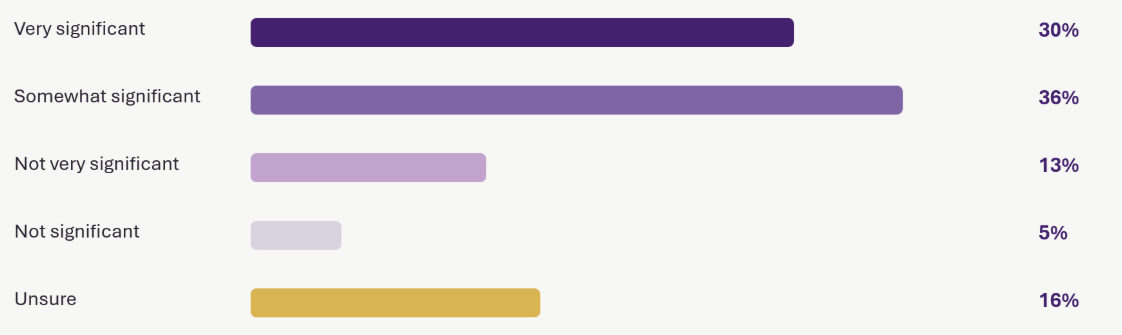
- Very significant: 30%
- Somewhat significant: 36%
- Not very significant: 13%
- Not significant: 5%
- Unsure: 16%
Priority: Protect Existing Facilities
Research identified three primary areas of need related to maintaining and improving existing school facilities.
Aging Systems
Repairs and improvements to roofs, heating and cooling systems, electrical systems and mechanical components.
Learning Spaces
Improvements to junior high science rooms, restrooms and spaces used for specialized instruction.
Safe Access
Improvements to pavement, sidewalks, pedestrian routes, parking areas and building entrances.
Expansion Concepts Draw Mixed Reactions
While participants expressed support for maintaining existing facilities, proposed expansions received more varied responses.
Athletics and Practice Space
Participants expressed support for safer surfaces, scheduling relief, gym space and equitable access. Questions focused on how these improvements should be prioritized relative to instructional and infrastructure needs.
Community and Multipurpose Building
Participants expressed interest in facilities that could serve both students and the broader community. However, concerns included the cost of new construction, opportunities to reuse existing space and future operating expenses.
Initial Bond Response
Initial survey responses indicated more support than opposition for a potential school bond proposal, although support was not overwhelming.
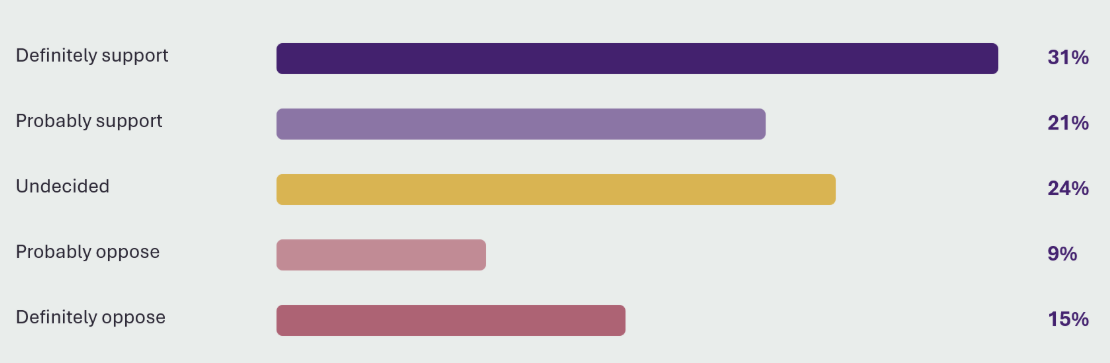
Responses were:
- Definitely support: 31%
- Probably support: 21%
- Undecided: 24%
- Probably oppose: 9%
- Definitely oppose: 15%
Overall, 52% of respondents indicated they would definitely or probably support a bond proposal, while 24% indicated opposition and 24% remained undecided.
These findings suggest that the scope, cost and priorities of a future proposal will be important considerations as planning continues.
SWOT Analysis
A strengths, weaknesses, opportunities and threats (SWOT) analysis identified key factors that could influence future facility planning and community support.
Strengths
Facility needs are tangible, stakeholders are engaged and approximately 66% of survey respondents recognize significant facility needs.
Weaknesses
Approximately $142.7 million in facility needs have been identified. Challenges include unclear prioritization of those needs and uneven public knowledge of facility conditions.
Opportunities
Opportunities include creating a phased master plan, comparing renovation with new construction and testing clear project and tax scenarios with the community.
Threats
Potential challenges include a plan being viewed as too broad or containing optional improvements, along with concerns about operating costs, taxes, enrollment and facility utilization.
Recommended Next Steps
The research identified five next steps to guide future facility planning.
- Rank needs: Prioritize safety and core infrastructure, followed by instructional function and longer-term enhancements.
- Define a core option: Develop a building-specific scope addressing the most documented repair and learning needs.
- Compare alternatives: Evaluate repair, renovation, reuse and new construction options, including operating costs.
- Show the details: Provide costs, photos, schedules, tax illustrations and information about changes made in response to community feedback.
- Test revised scenarios: Measure community priorities and support at defined funding levels.
Bottom Line
The findings emphasize three priorities for moving forward:
- Show the need.
- Explain the choice.
- Test the scope.
Presented by
Research findings and analysis presented by Kelsey Birkmeier, CEO of Banach, Banach & Cassidy, Inc.